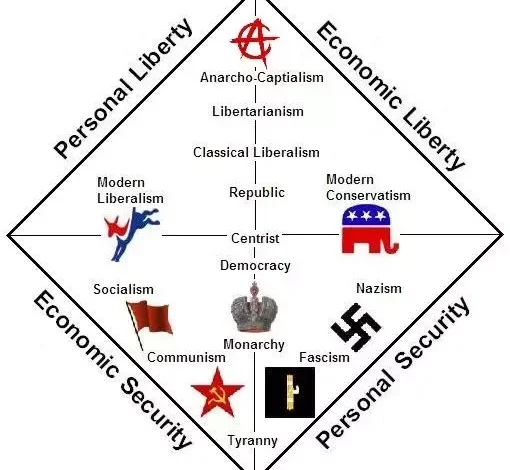
It’s no secret that the world of politics can be confusing, especially when it comes to all the different terms used to describe various political ideologies. In this blog post, we’ll be breaking down some of the most commonly used terms in right and left-wing politics so that you can be better informed the next time you find yourself in a conversation about current events.
Right-wing politics refers to a political ideology that centres on personal freedom and limited government. Right-wing ideologies typically favour laissez-faire economics, gun rights, smaller government, and traditional social values.
Some right-wing politicians in the UK include Nigel Farage, Michael Gove, and Boris Johnson. In the USA, some right-wing politicians include Ted Cruz, Rand Paul, and Ben Carson.
Left-wing politics, on the other hand, refers to a political ideology that prioritises equality and social justice. Left-wing ideologies typically favour increased government intervention in the economy, universal healthcare and education, and more relaxed immigration policies
Some famous left-wing politicians in the UK include Jeremy Corbyn and Nicola Sturgeon, while Bernie Sanders and Elizabeth Warren are some notable examples in the USA.
Relevant Right-Wing Politics Jargon
- Conservatism: A political ideology that favours traditional values and institutions over change or progress.
- Capitalism: An economic system in which private individuals or businesses own the means of production and operate for profit.
- Free Market: An economic system in which the prices of goods and services are determined by supply and demand, with little or no government intervention.
Relevant Left-Wing Politics
- Liberalism: A political ideology that believes
- Capitalism: An economic system in which private citizens own businesses and property, and are free to produce goods and services without government interference.
- Free Market Economy: An economic system in which the prices of goods and services are determined by the open market, rather than by government intervention.
- Laissez Faire: A hands-off approach to business and economics, characterized by minimal government involvement.
- Individualism: The belief that each individual is sovereign over their own life, and should be free to pursue their own interests without government interference.
- Limited Government: The belief that government should have limited power over its citizens, particularly when it comes to their personal freedoms.
- Fiscal Responsibility: The belief that the government should live within its means, and not spend more money than it takes in through taxes and other revenue streams.
- Patriotism: Love for or devotion to one’s country.
- Nationalism: Pride in or identification with one’s country, often coupled with a belief in its superiority over other countries.
- Communism: A political ideology that calls for the abolition of private property, as well as a classless society in which all citizens are equal.
- Progressivism: A political ideology that favours using the government to protect social welfare, as well as working towards equality of opportunity for all citizens.
- Radicalism: Extreme or progressive views, particularly when it comes to social or political issues.
Hopefully, this article has given you a better understanding of some of the most commonly used terms in right and left-wing politics. Remember, there is no correct or incorrect answer when it comes to your personal political beliefs – everyone is entitled to their own opinion! – but it is important to be informed about the different ideologies out there so that you can make an educated decision about which one aligns best with your own values and beliefs.